I made these ten photographs during three days in Arches National Park, from October 9 through 11, 2022. They move from a wide view of weather over slickrock to arches, reflected stone, and openings that frame the sky.
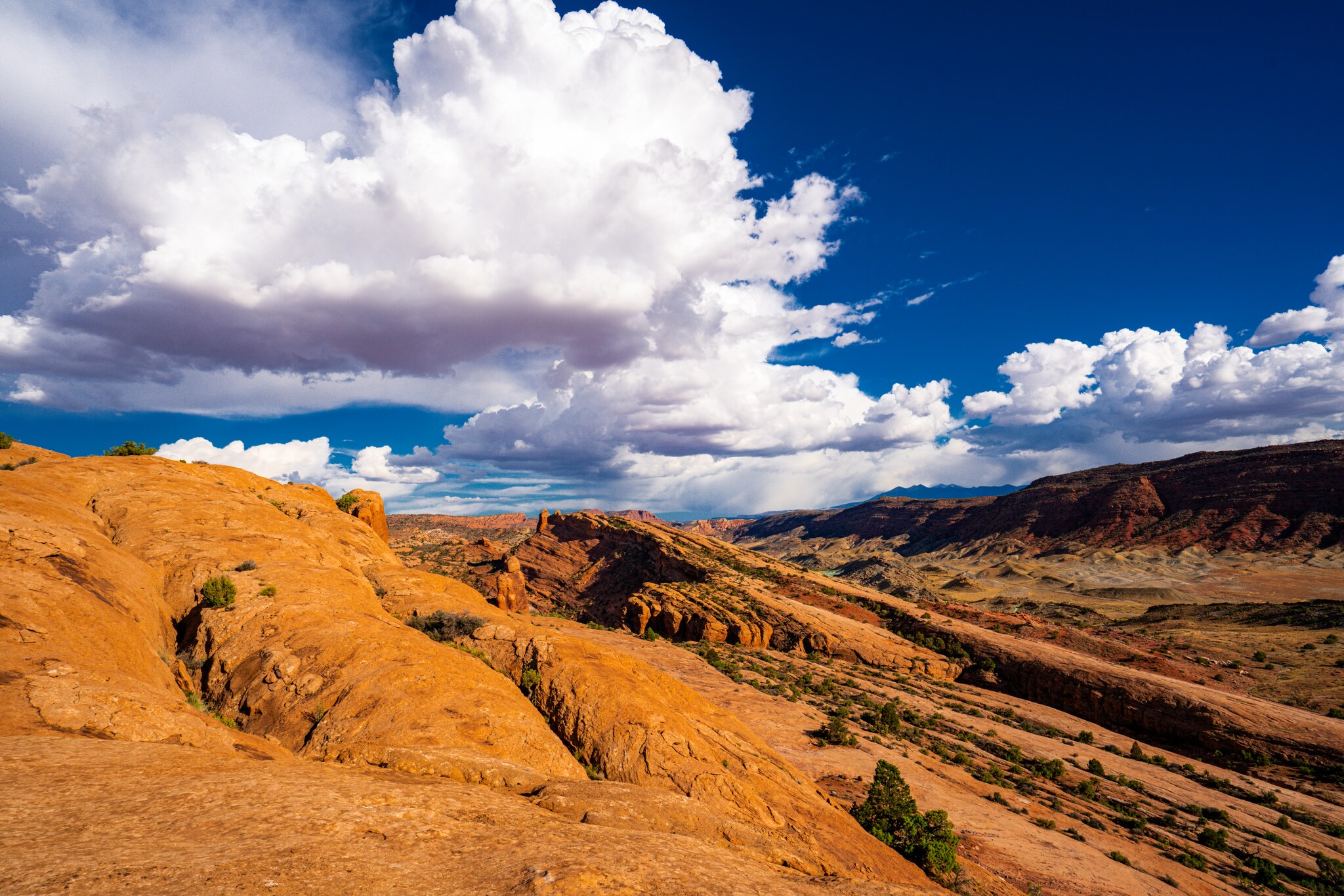
Weather and an icon, October 9
I started with the widest view. At 19mm, the eroded foreground looks almost like a small model of the valley beyond it. Sunlight stays on the sandstone while the cloud bank fills nearly half the frame. In this photograph, the weather is bigger than the rock.
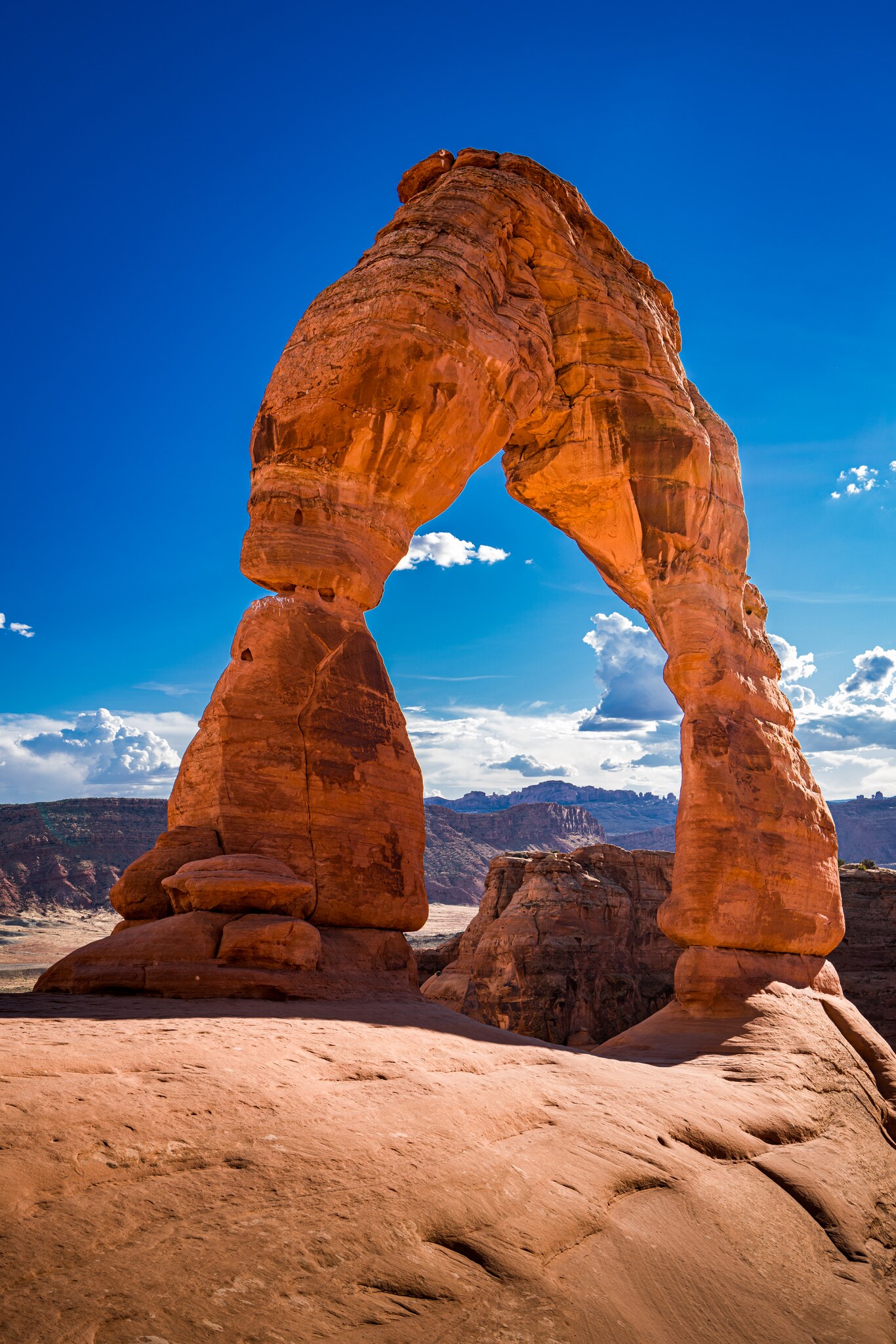
Twenty-nine minutes later, I turned the camera vertically at Delicate Arch. The portrait frame gives the arch room to rise while keeping the distant mesas visible through the opening. It connects the ledge, the middle distance, and the horizon instead of separating the arch from its surroundings.
From a burst of light to a ribbon of stone, October 10
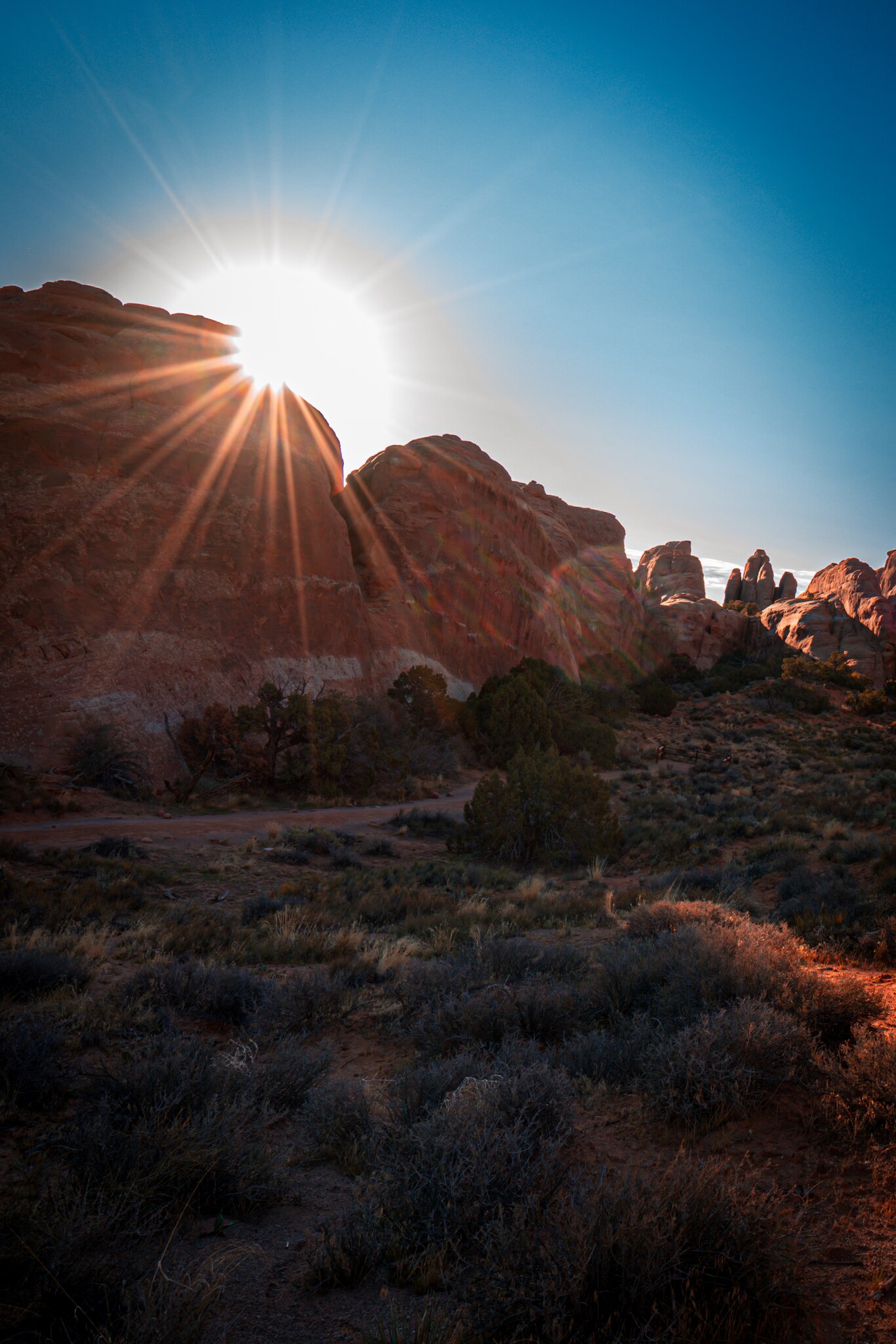
The next morning, I used a 16mm lens and placed the sun right on the edge of the sandstone. A small step would have hidden it. From this position, it breaks into a starburst while the surrounding fins stay mostly in shadow. That one bright point organizes the whole frame.
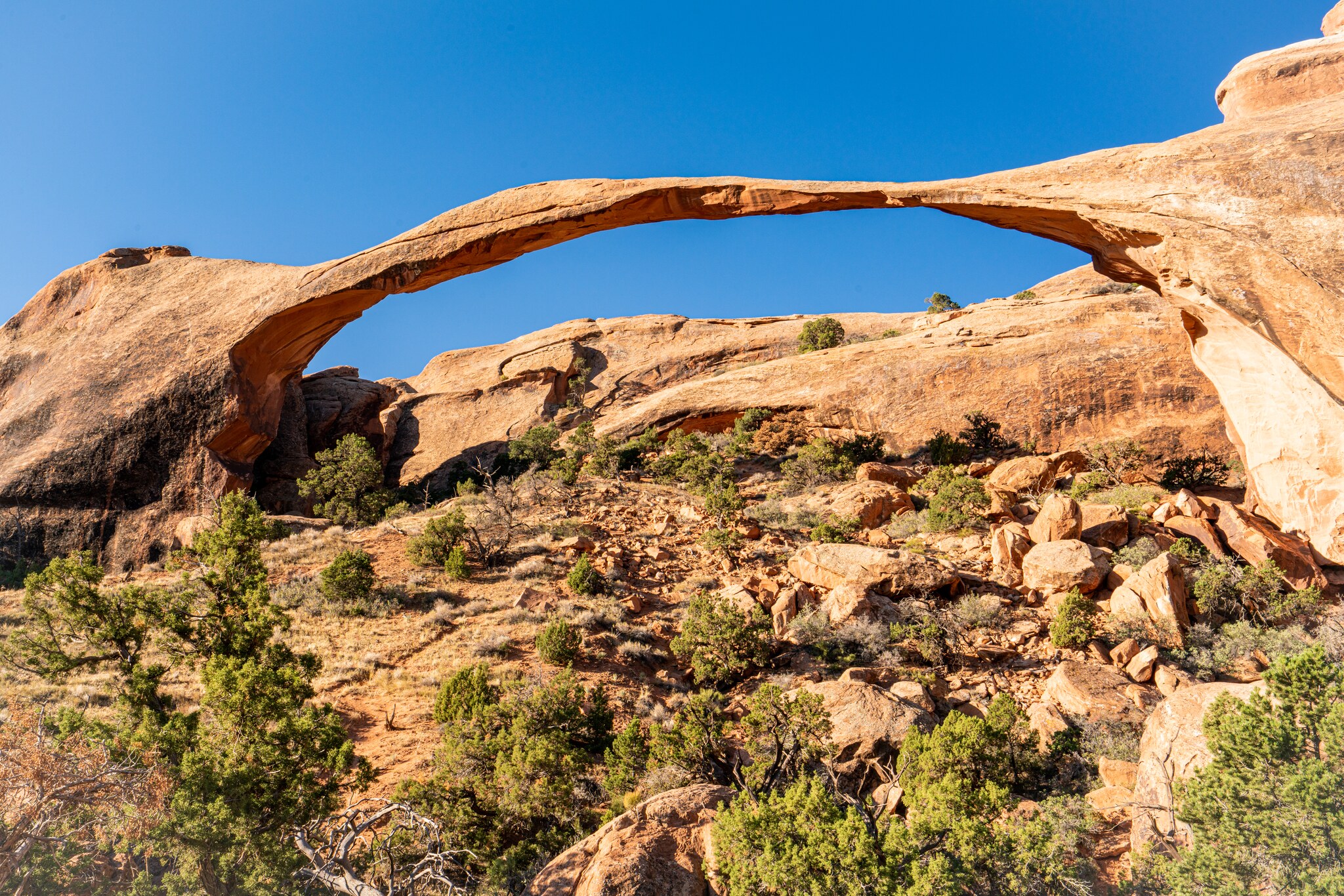
At Landscape Arch, the balance flips. The span is remarkably thin, almost a pale line hanging above broken stone, shrubs, and shadow. At 29mm and f/16, I could keep the full arch sharp along with the rough ground that makes it look so delicate.
Apertures inside apertures, October 11
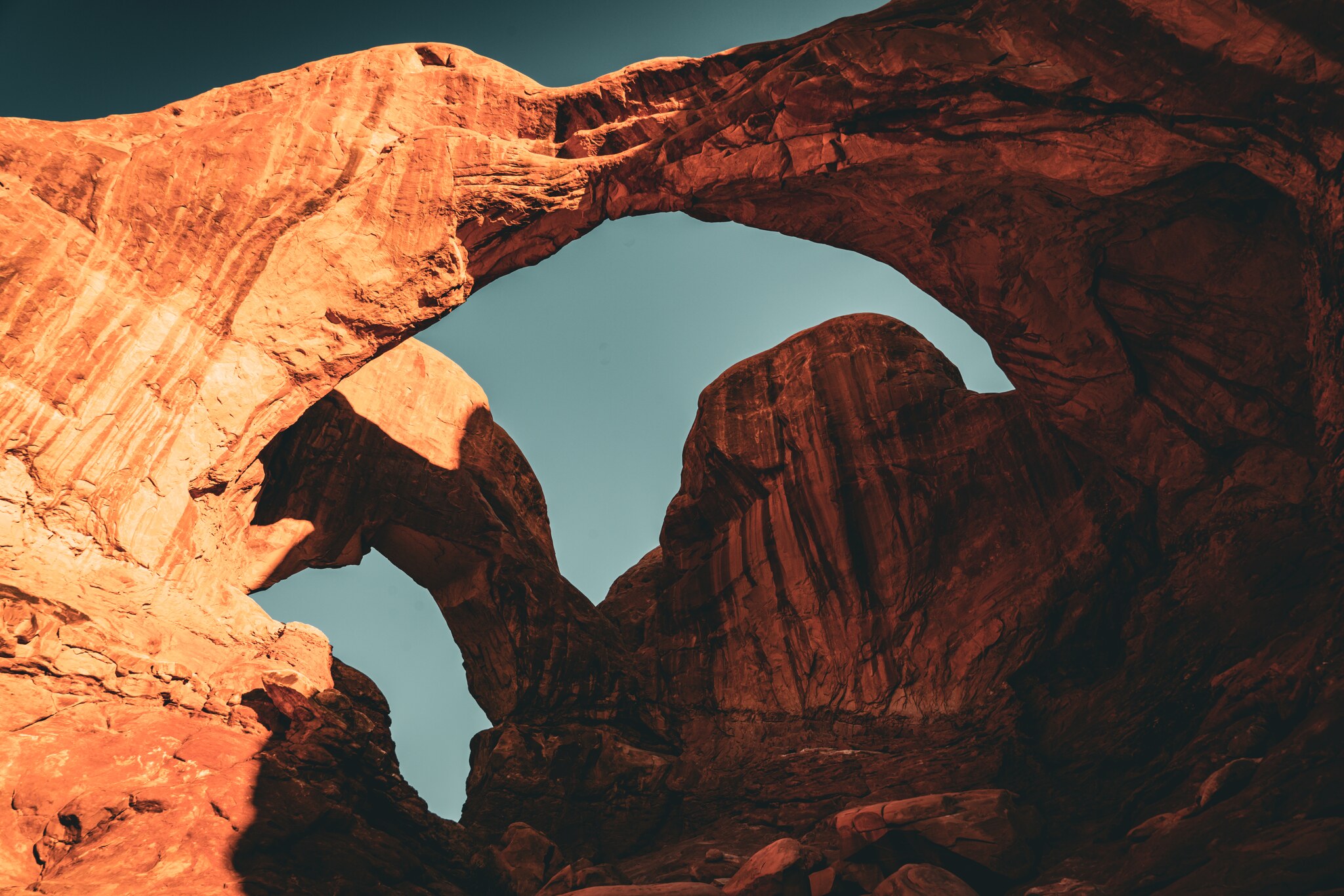
On the final day, I moved through the Windows Section and used each opening to frame the next view. Looking up from beneath Double Arch, two joined spans overlap with a third patch of blue. Sunlight warms the upper stone while the interior stays cool and dark, creating alternating bands of orange and shadow.
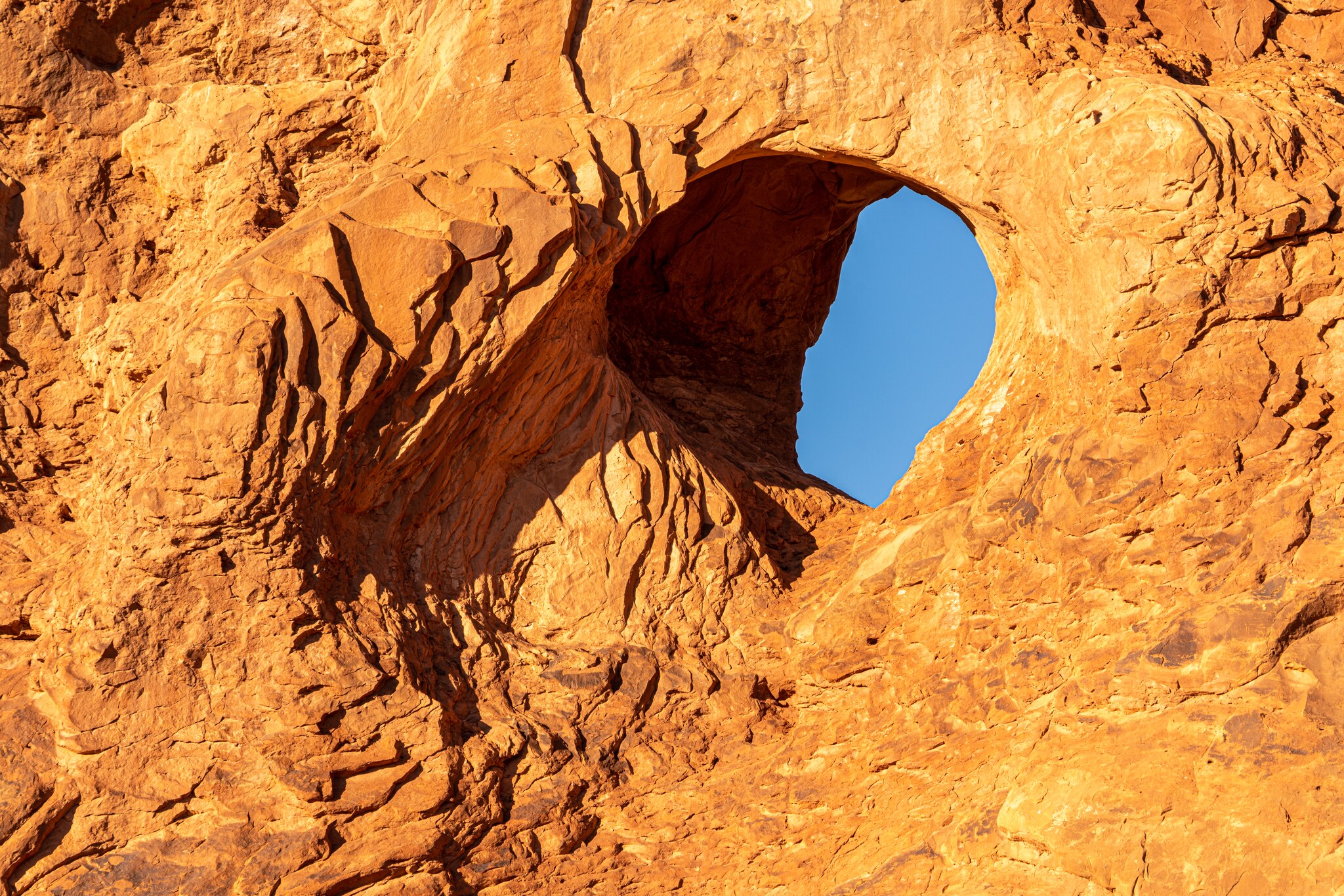
At 124mm, almost every clue to scale disappears. One small opening looks like a blue eye surrounded by ripples, seams, and shallow folds. Water and weather found a weak place in the stone and slowly opened it.
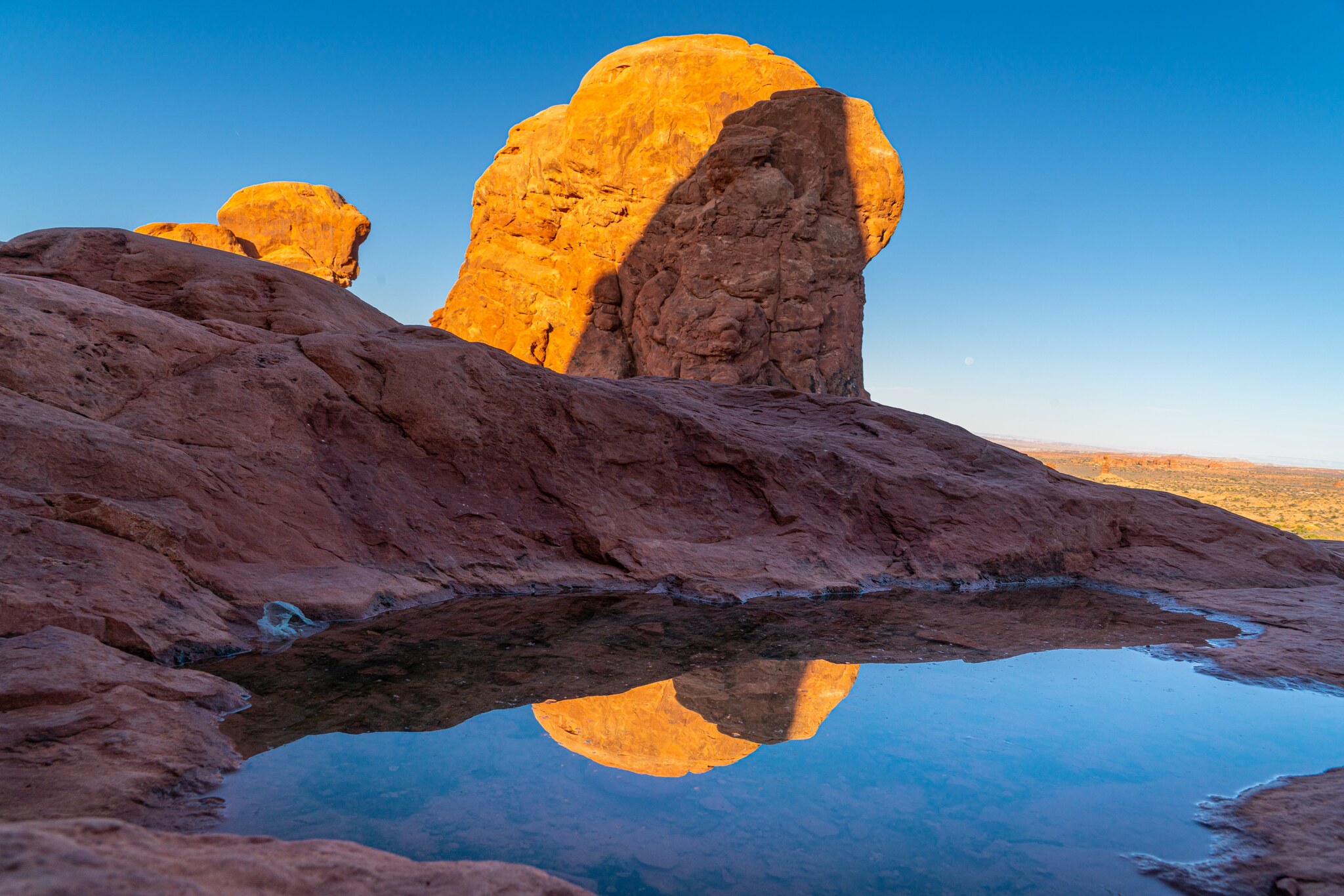
Nearby, rainwater had collected in a shallow pothole. A sunlit sandstone tower appears above the ledge and again below it, upside down in the still water. After so many views looking upward, the reflection briefly makes the desert feel symmetrical.
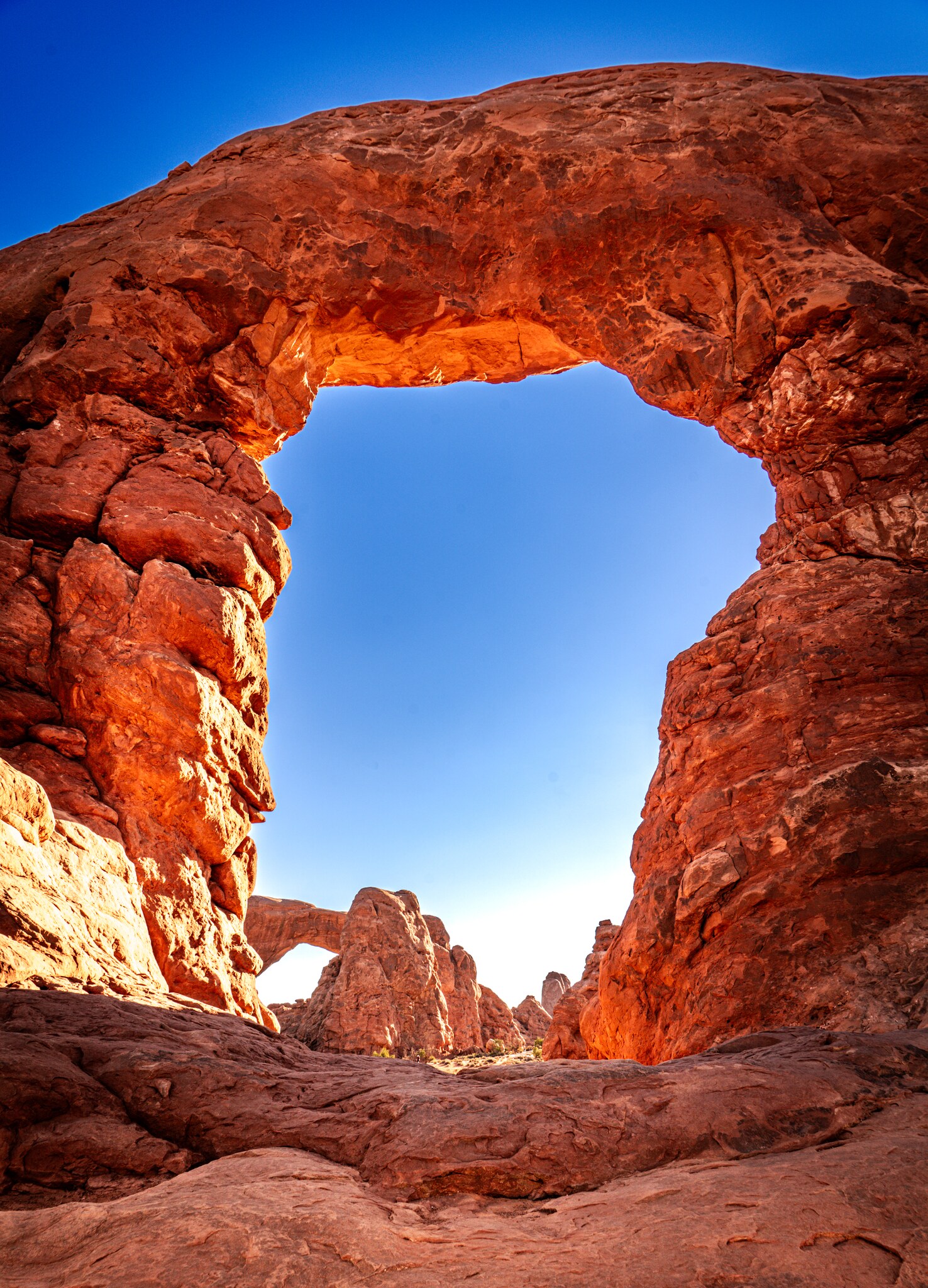
At North Window, the frame within a frame becomes literal. Turret Arch sits beyond the large opening, small but easy to find once you look through it. The surrounding rock fills most of the portrait frame, leaving the brightest blue and the distant arch in the center.
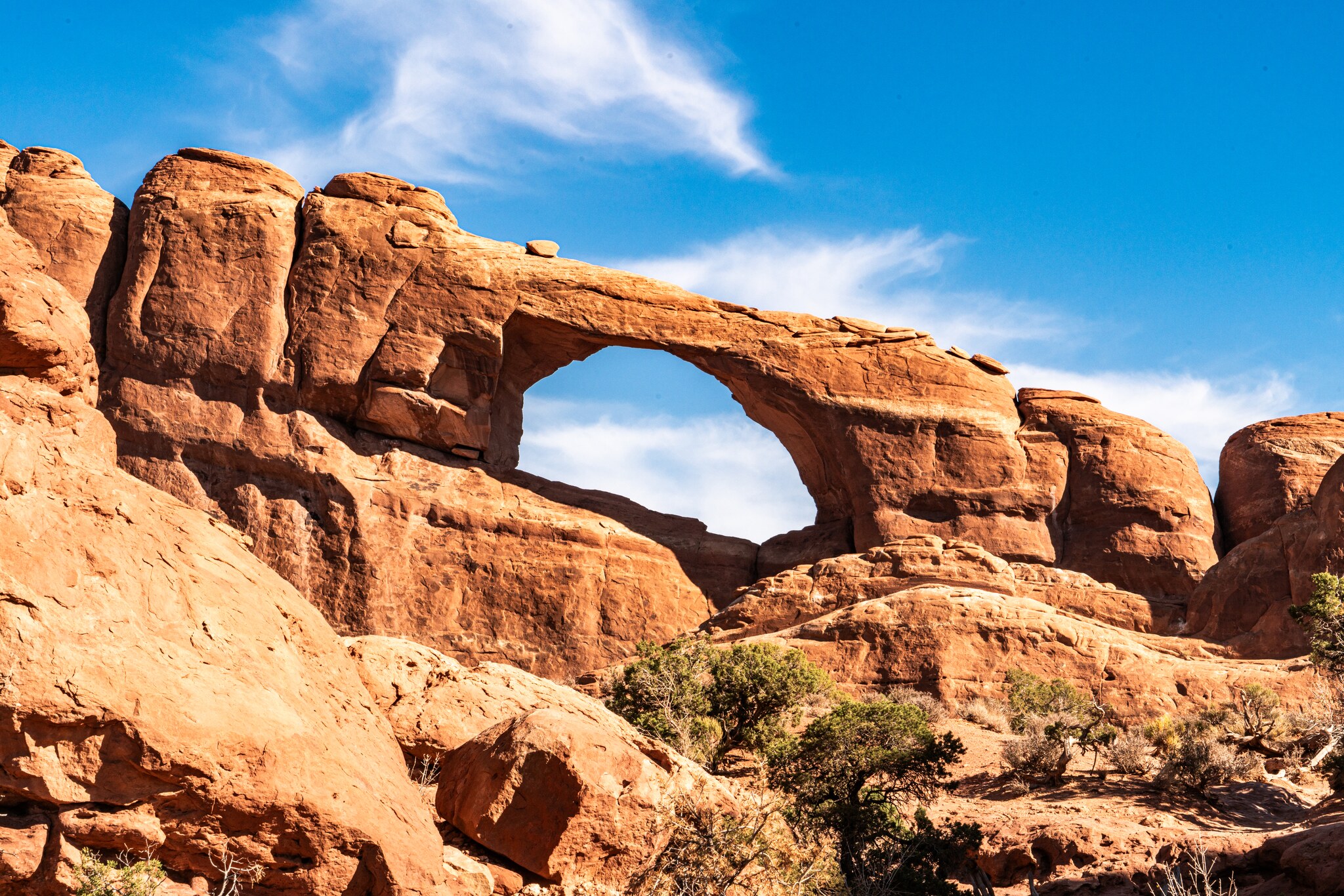
By late morning, I had moved to 118mm at Skyline Arch. The longer lens simplifies the scene into three bands: pale foreground, a darker wall and opening, and blue sky crossed by thin clouds. Here, the arch is simply a quiet break in a long sandstone wall.
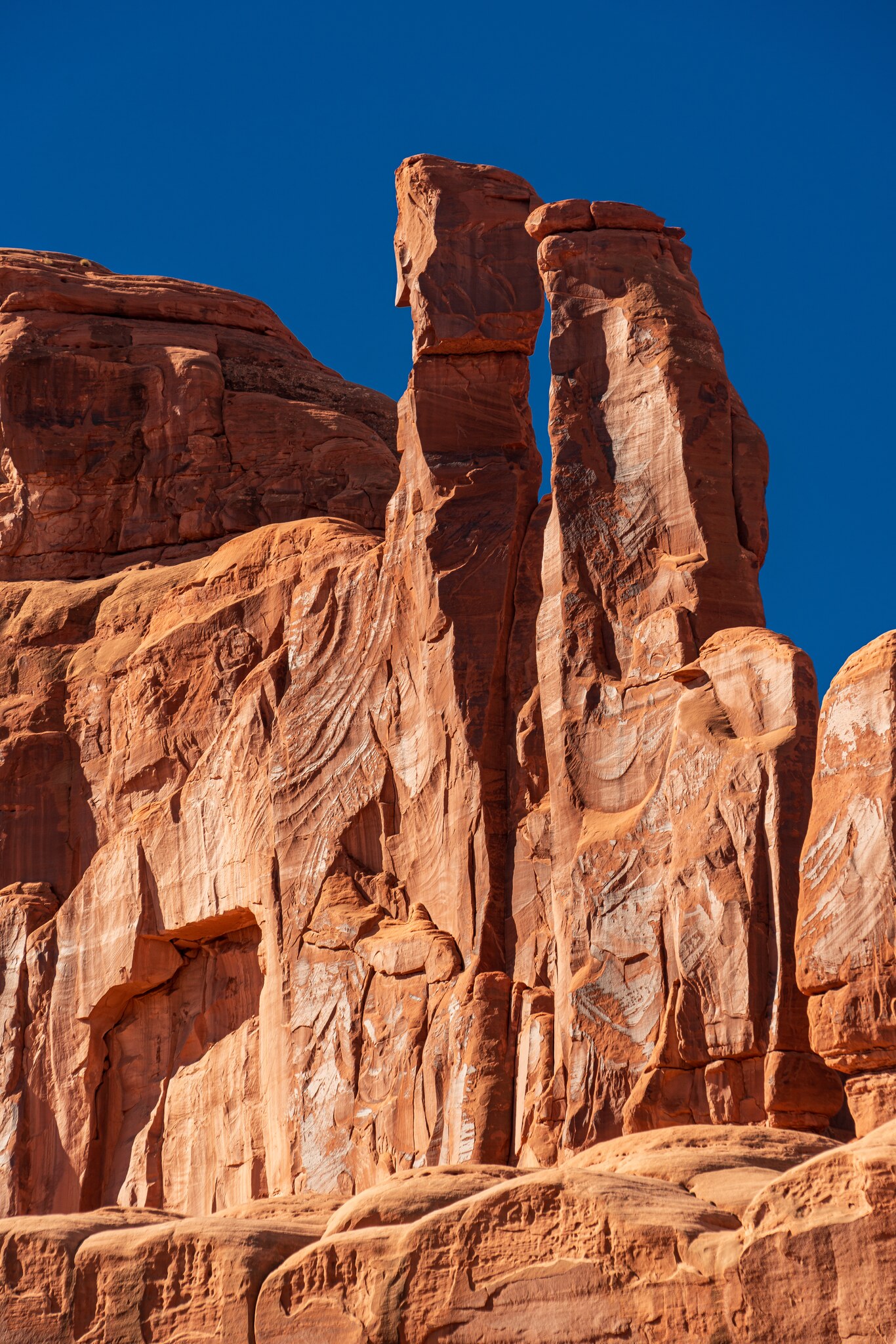
I finished near the Courthouse Towers, where there is no complete arch. At 169mm, two weathered monoliths look like narrow walls separated from the larger cliff. The blue gap between them reminded me of the openings I had been photographing.
What kept catching my eye
Looking back at the ten photographs, I kept moving from the wide landscape into smaller openings. An arch frames the horizon. A small hole looks like an eye. Water repeats the stone below it, and one window holds another. I used lenses from 16mm to 169mm, but kept noticing how the sandstone framed the sky, distance, light, and reflection around it.