
I recently photographed these ten ceramic pieces from my studio. They bring together several things I have been exploring: blue crystalline glazes, altered closed forms, raised texture, and saturated color.
The group ranges from sculptural bottles to an open functional form, but I keep looking at the same relationship between silhouette and surface. That balance changes from one piece to the next.
Crystalline glaze: patterns shaped by the firing
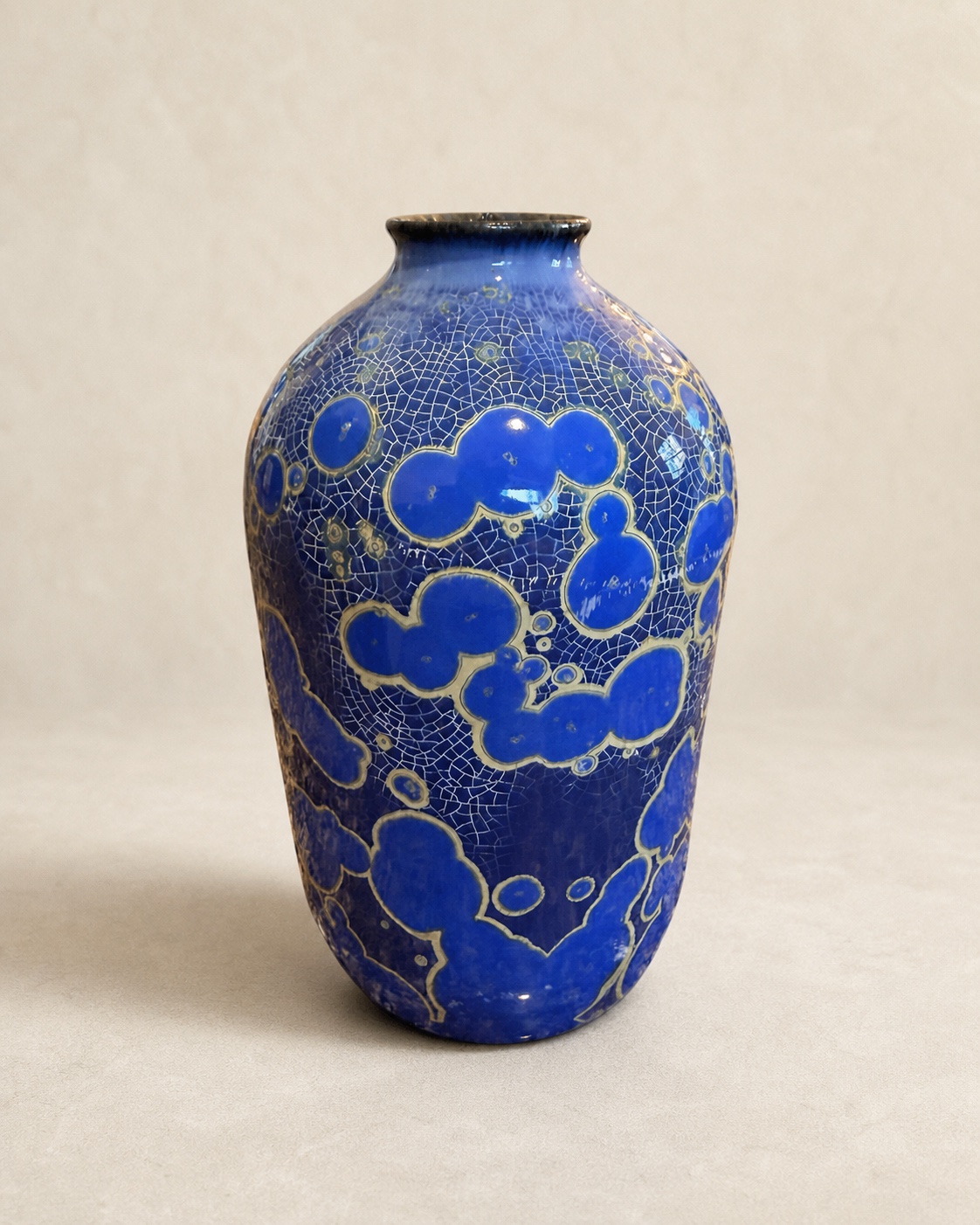
My crystalline-glazed vessels usually start with a clear profile that gives the fired surface room to develop. In this group, cobalt, pale blue, celadon, cream, and warm gold grounds give the pieces very different characters.
Some crystals gather into large rounded blooms. Others form smaller pools or sit inside a fine crackle network. These patterns grow in the glaze during a carefully controlled kiln-cooling cycle. They are not painted on, and they cannot be duplicated exactly. Even pieces made with related materials come out with their own character.
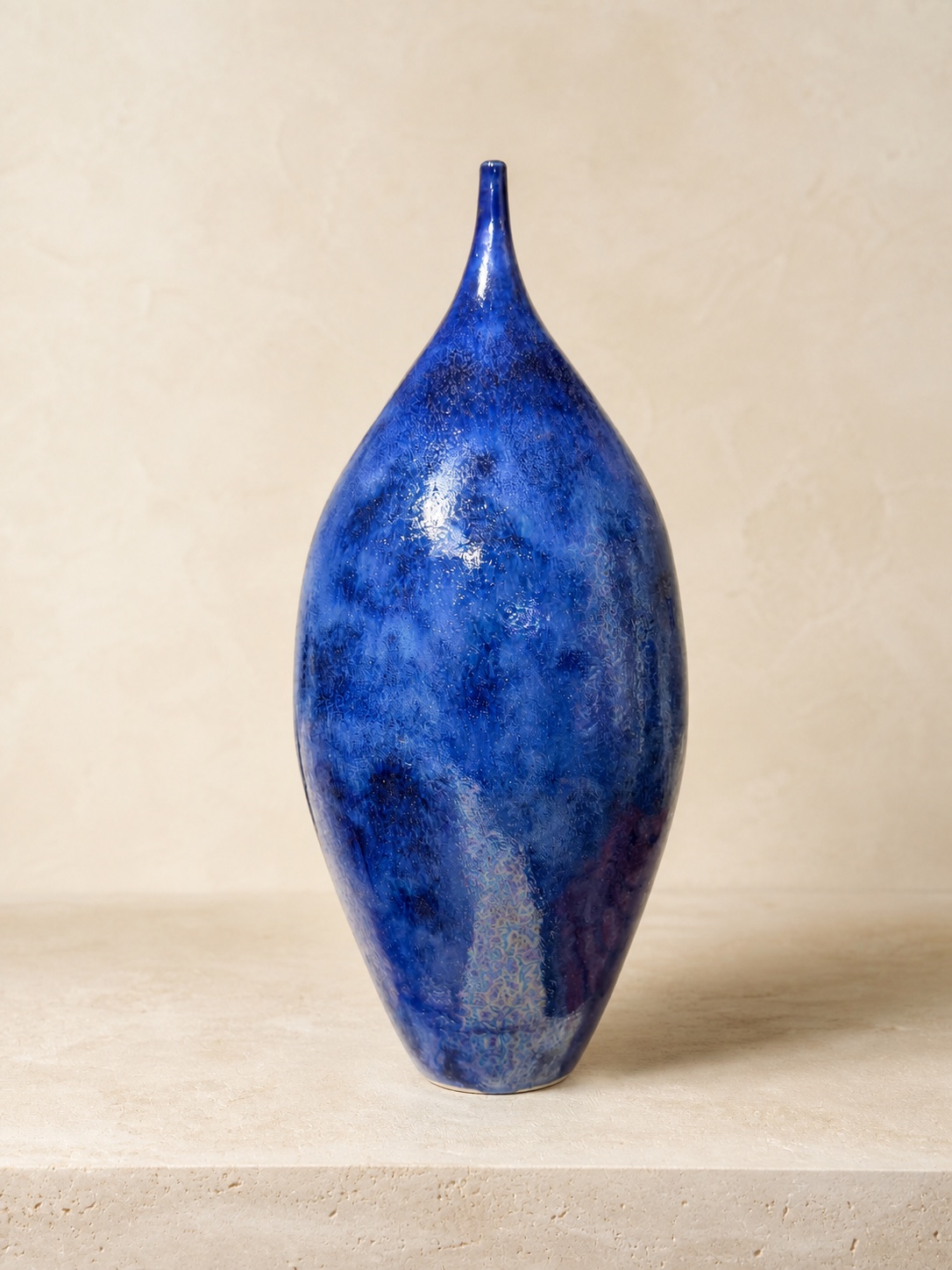
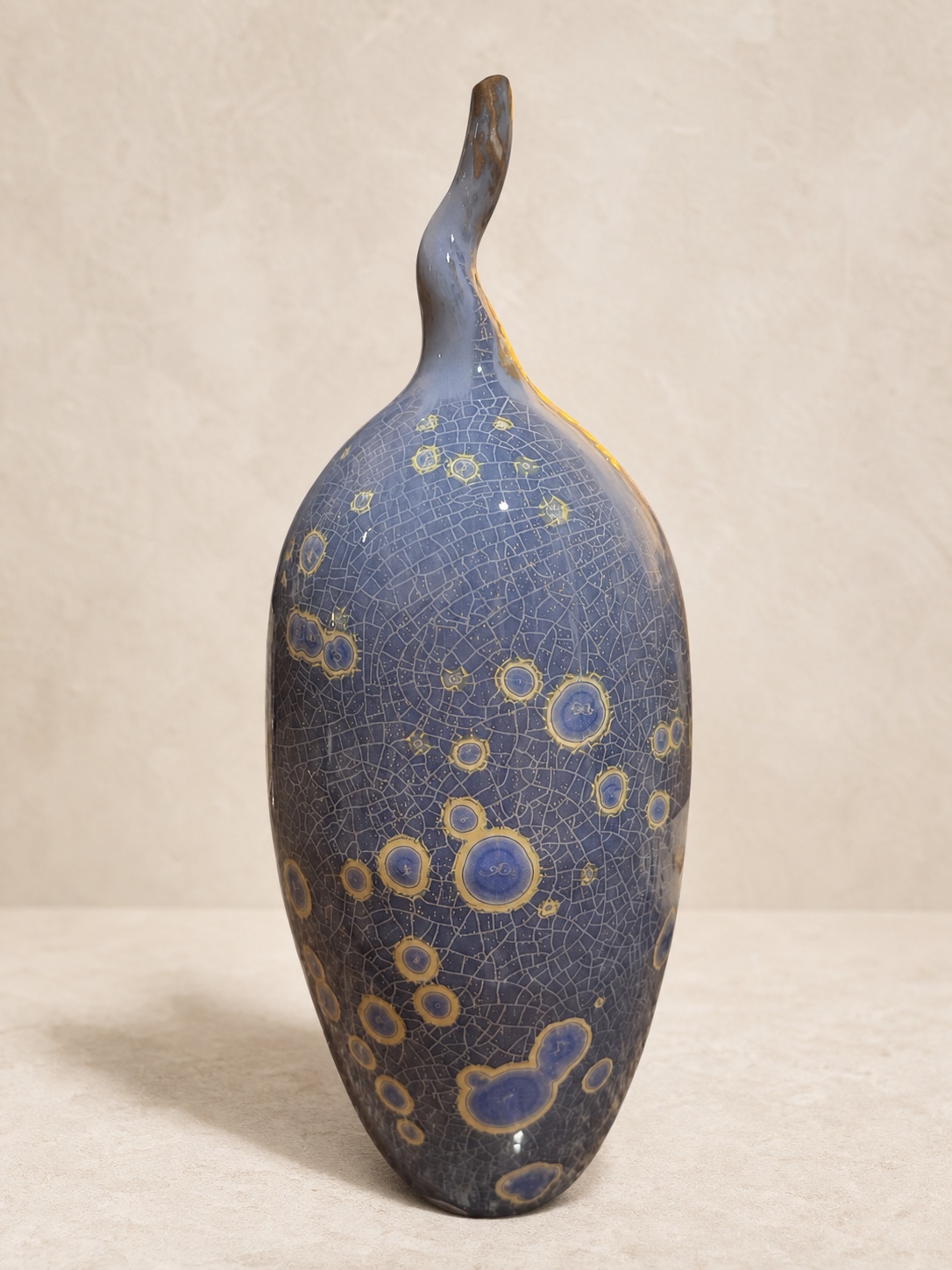
The tall cobalt bottle has a narrow pointed neck and a deep surface that shifts between blue and smoky violet. The gently curved tip on the blue and gold bottle changes its outline before you get to the glaze.
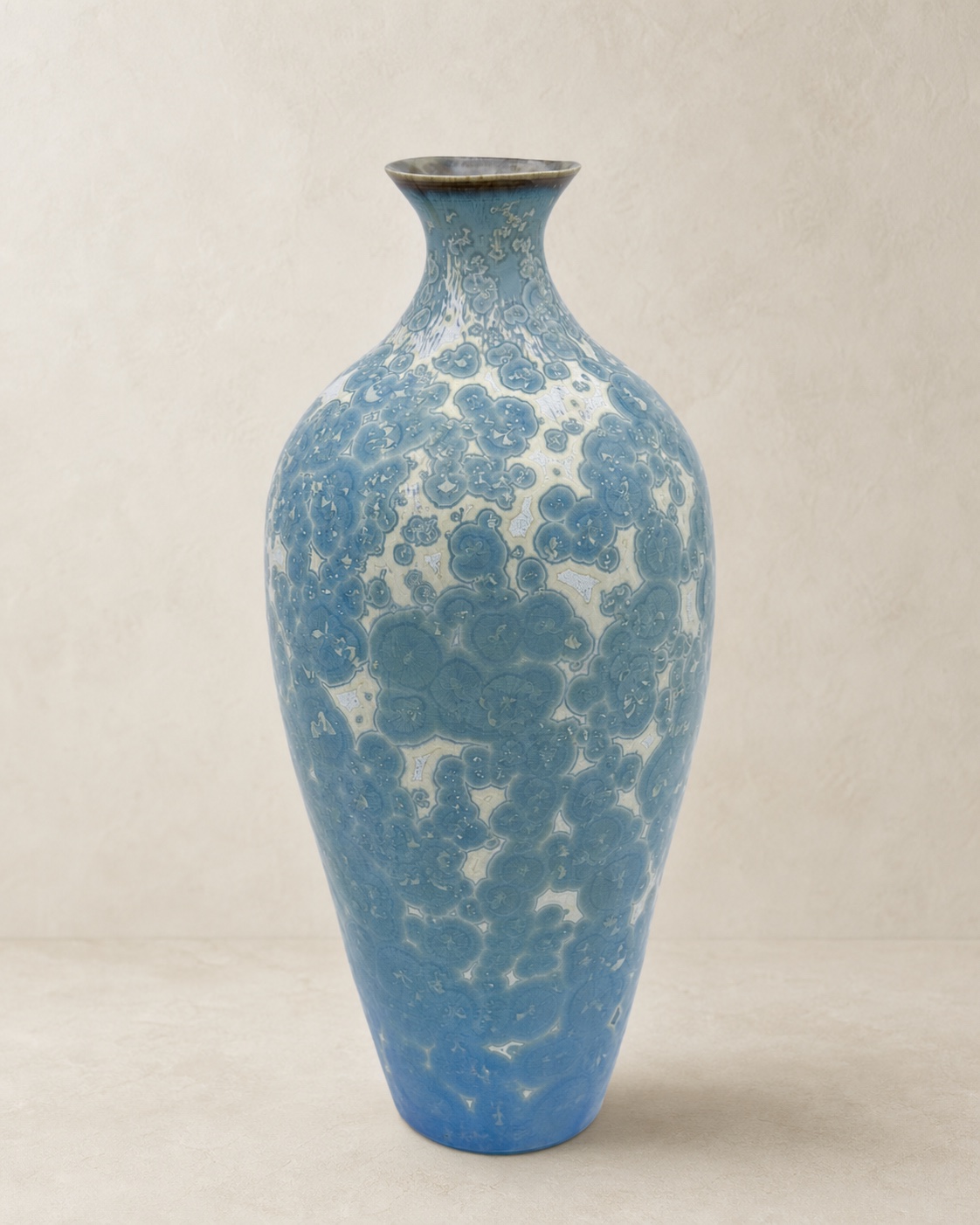
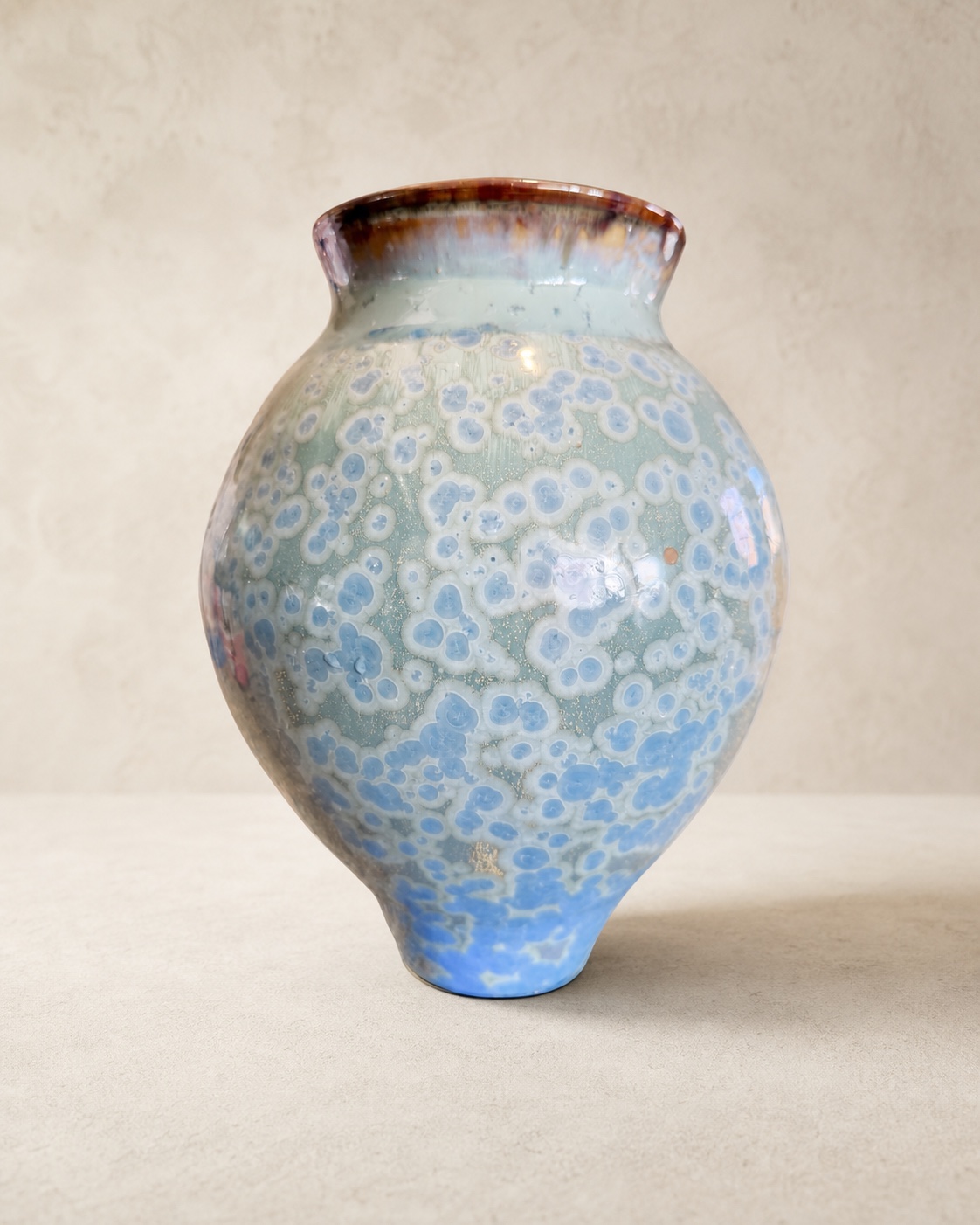
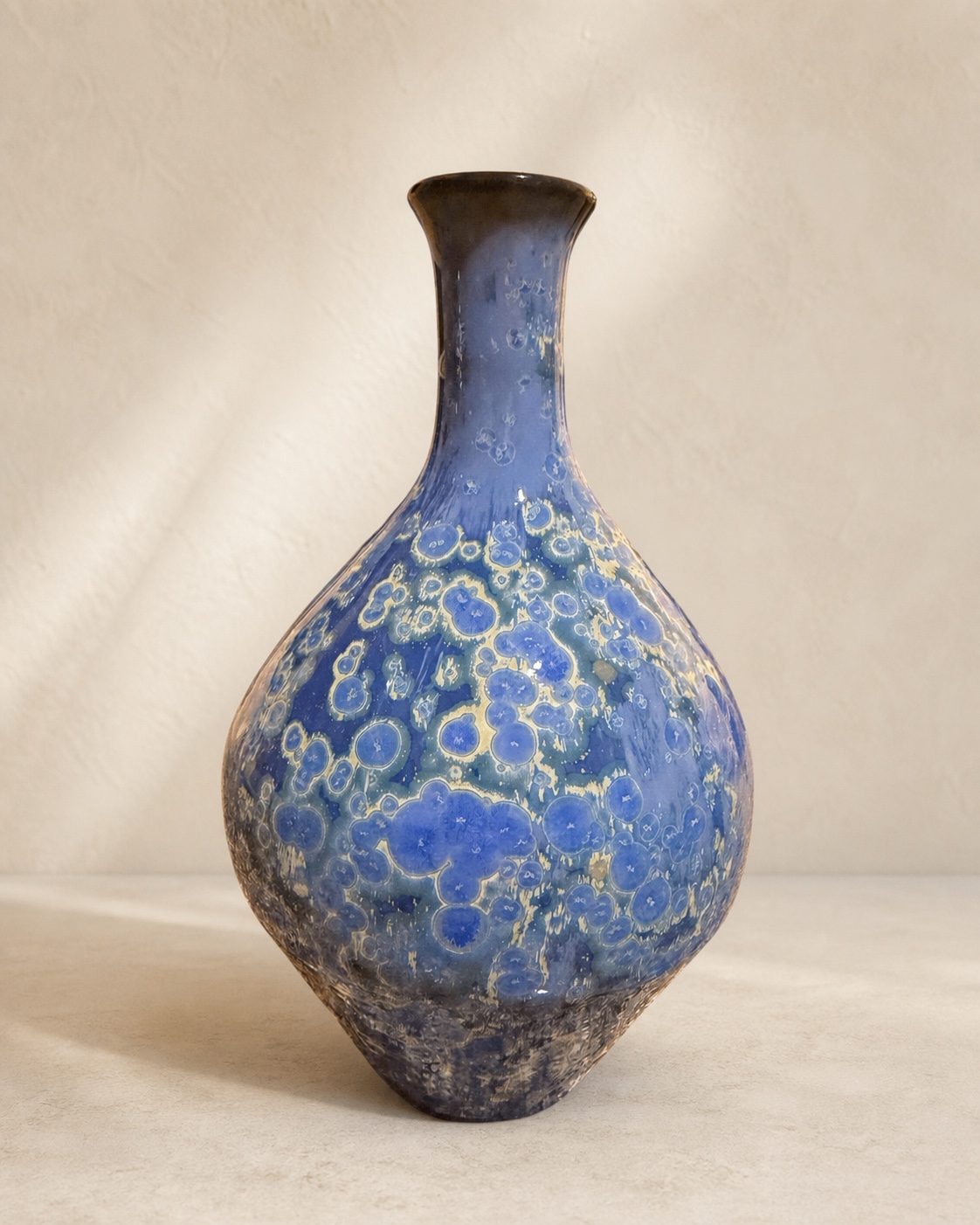
The lighter pieces show another side of the process. Pale blue crystals spread across a cream ground on the tall vase. The rounded celadon vessel has softer clusters beneath a warm dark rim. On the fuller blue and gold bottle, a long flared neck balances the weight of the crystalline surface.
Black texture and altered profiles
Two sculptural bottles go in a different direction. Instead of letting glaze crystals organize the surface, I used a raised black vertical passage to divide each form.
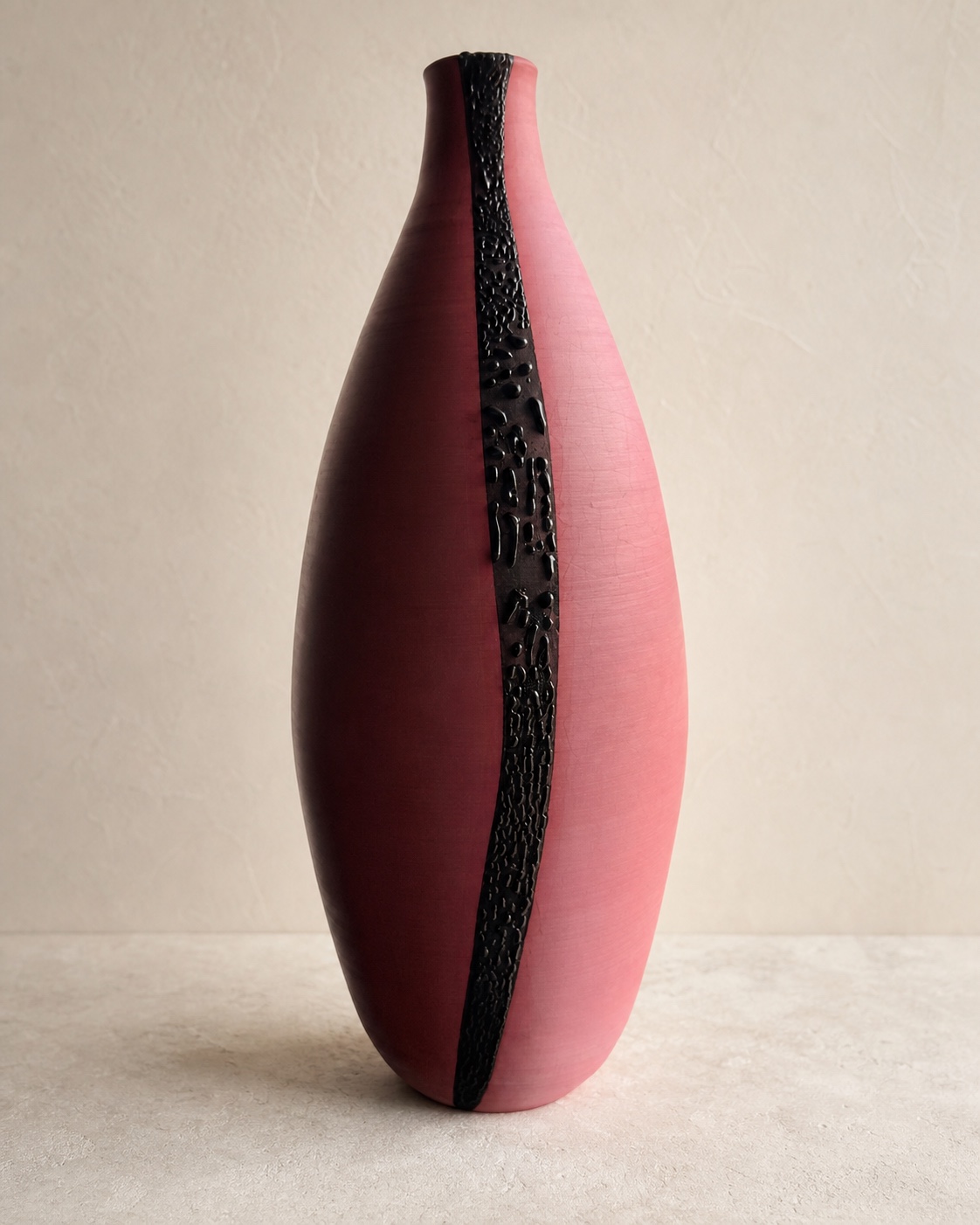
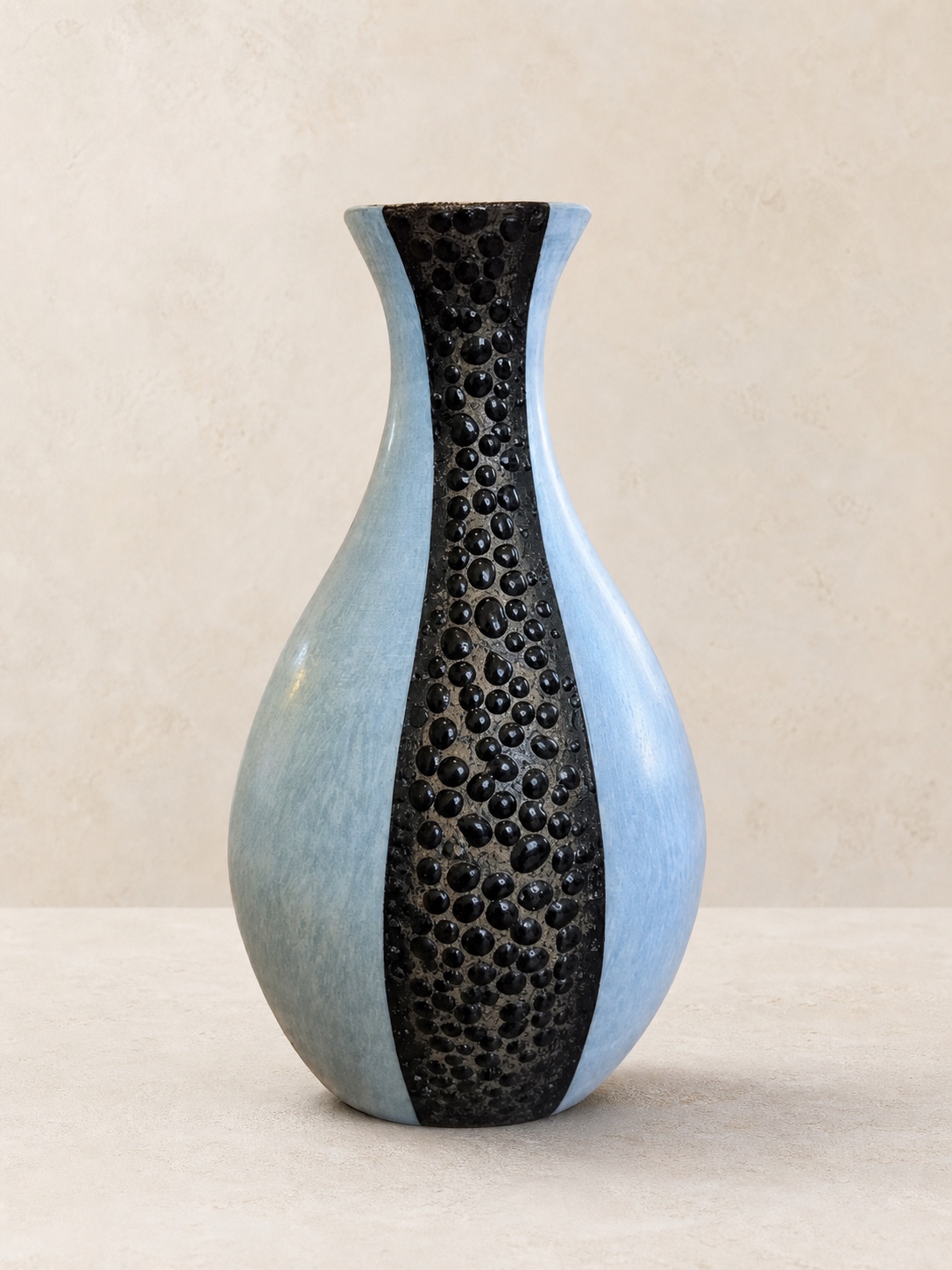
On the pink and maroon bottle, the dark line works almost like a seam from the neck to the foot. The pale blue bottle is softer and rounder, while its glossy black section catches the light and adds texture. On both pieces, the black line helps show how the shape changes from neck to foot.
Building texture with a clay 3D printer
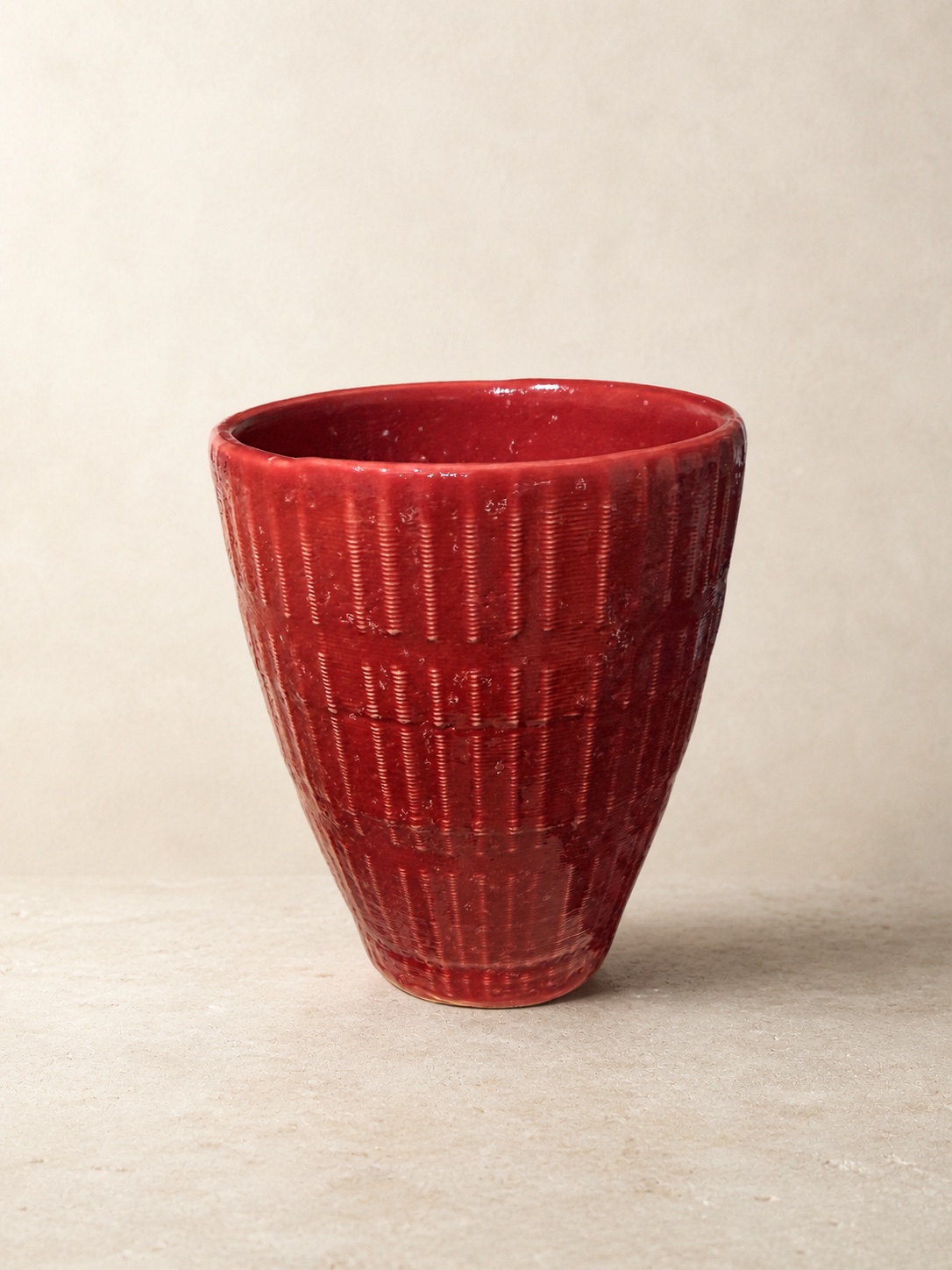
I made the deep red cup with a different tool, but it has the same focus on surface. It was 3D printed in clay with my Eazao X-1 Potter. The printer extrudes a continuous coil of soft clay through a nozzle and follows a sliced digital model one layer at a time. As the layers build, the programmed path becomes both the structure of the cup and its visible texture.
Clay 3D printing still requires the full ceramic process. The clay consistency and extrusion rate have to stay balanced so each layer bonds without deforming the walls. After printing, the piece has to dry slowly and evenly before it is bisque fired, glazed, and fired again. The machine establishes the form, but material preparation, toolpath decisions, drying, and firing all affect the result.
What I want to keep exploring
I keep moving between glaze chemistry and physical texture because they give me different kinds of control. A crystalline firing allows the crystals to grow and vary in the kiln. Altering a silhouette or building a repeated surface lets me shape the result more directly. Both approaches leave visible signs of how the piece was made.
You can see more work in the ceramic gallery, learn about my crystalline glaze process, or view the pieces currently listed under available work.